

A lot of beginning online marketers just throw up a WordPress site, write whatever’s on their mind, and add a few photos or videos just because.
They think, “If you build it, they will come.”
Nothing could be further from the truth.
Believe it or not, the online marketing pros do NOT post rambling, random, stream-of-consciousness content with cute pictures or funny videos just to fill up some weekly publishing calendar.
They create every piece of online content with one purpose only: to engage their visitors and get them to take a specific action.
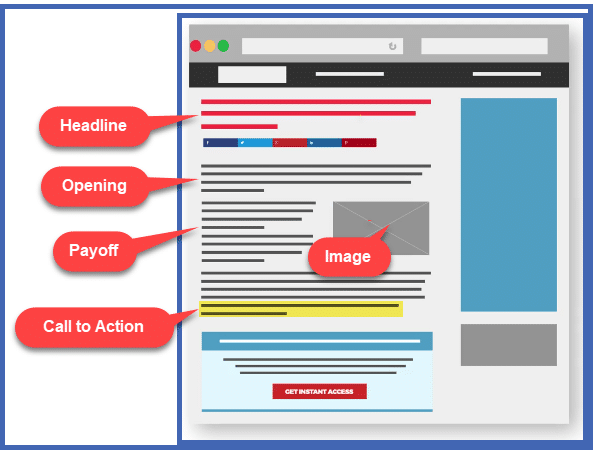
You’re looking at a model of a typical Word Press blog setup, with the main part of the page on the left, and a sidebar on the right.
We recommend this layout, as it has been proven to produce the best results in our efforts in driving cold traffic from social media. In other words, it works.
We’re going to focus on the main content area on the left side of the page.
That space contains five main elements that you’ll need to craft carefully when setting up your perfect landing page:
- The Headline – the “big promise” you make to the visitor to answer a specific question or solve a particular problem…
- The Opening – a compelling reason to stay on the page or keep reading…
- The Payoff – a list, a story, a case study, or an audio or video that delivers on the promise of your headline…
- The Call to Action – the specific action you want your website visitor to take…
- Images –visual or graphic points of focus to make your content easy to read
In this launch, we’ll give you specific guidelines to create a landing page that communicates your identity, your value, and your authority to the cold traffic that arrives there from Facebook or other social media advertising.
While every blogger has a unique look, feel, and voice, the most successful marketers understand the anatomy of killer content – the kind that converts visitors to leads and customers.
The key to creating that killer content is to follow a structured template, so you make sure every single piece of content you post provides value to your visitors.
Let’s get started!